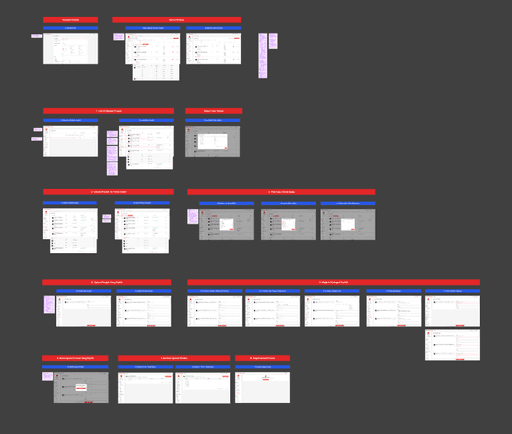
Omni-Channel Integration: Tokdistributor x Tiktok Seller

Omni-Channel Integration: Tokdistributor x Tiktok Seller

Company :

Tokodistributor (Marketplace)

Tokodistributor (Marketplace)

Duration :

1 month

1 month

Project Overview

Project Overview

Tokodistributor is an e-commerce platform that connects suppliers and resellers. As TikTok Seller grew into a major sales channel, suppliers faced challenges managing inventory across platforms.

Goal

Goal

Design and deliver an omni-channel integration that synchronizes product stock in real-time between Tokodistributor and TikTok Seller, reducing manual work and miscommunication.

My Role

My Role

Product Designer (end-to-end)

Scope: Research, Ideation, Flow Mapping, Wireframing, UI/UX Design, Collaboration with Developers

Problem Statement

Suppliers often faced stock mismatches between TikTok Seller and warehouse inventory.

  1. Orders on TikTok were sometimes accepted while warehouse stock was empty.

  2. Updates were slow and manual, creating miscommunication and frustrated customers.

  3. This led to lost sales opportunities and lower trust in the platform.


Impact: Lost sales and reduced customer trust.


Why It Matters

  1. TikTok Seller became a strategic growth channel for suppliers.

  2. Without integration, inventory management was time-consuming and error-prone.

  3. A seamless integration could provide suppliers with one source of truth for their stock.


Project Goals

  1. TikTok Seller Integration – connect supplier accounts with Tokodistributor Seller.

  2. Stock Synchronization – align TikTok and warehouse inventory.

  3. Product Upload – enable direct product listing to TikTok.

  4. Onboarding & Education – support adoption with clear guides.


Research & Insights

  1. User Insights

    • User interviews → suppliers frustrated with manual stock updates.

    • Key pain point → sellers wanted to avoid updating stock across multiple platforms.

  2. Competitor Scan

    During research, I also analyzed omni-channel competitors in Indonesia:

Problem Statement

Suppliers often faced stock mismatches between TikTok Seller and warehouse inventory.

  1. Orders on TikTok were sometimes accepted while warehouse stock was empty.

  2. Updates were slow and manual, creating miscommunication and frustrated customers.

  3. This led to lost sales opportunities and lower trust in the platform.


Impact: Lost sales and reduced customer trust.

Why It Matters

  1. TikTok Seller became a strategic growth channel for suppliers.

  2. Without integration, inventory management was time-consuming and error-prone.

  3. A seamless integration could provide suppliers with one source of truth for their stock.


Project Goals

  1. TikTok Seller Integration – connect supplier accounts with Tokodistributor Seller.

  2. Stock Synchronization – align TikTok and warehouse inventory.

  3. Product Upload – enable direct product listing to TikTok.

  4. Onboarding & Education – support adoption with clear guides.


Research & Insights

  1. User Insights

    • User interviews → suppliers frustrated with manual stock updates.

    • Key pain point → sellers wanted to avoid updating stock across multiple platforms.

  2. Competitor Scan

    During research, I also analyzed omni-channel competitors in Indonesia:

Jubelio

Comprehensive omni-channel (marketplace, POS, warehouse, analytics). Mature system for enterprise.

Complex, better suited for larger businesses; less friendly for small resellers.

Competitor


Strengths


Weaknesses (for Tokodistributor context)

BigSeller

Strong in automation (order sync, inventory, analytics). Supports multiple marketplaces

Steep learning curve, mainly for high-volume sellers.

Competitor


Jubelio

Strengths


Comprehensive omni-channel (marketplace, POS, warehouse, analytics). Mature system for enterprise.

Weaknesses (for Tokodistributor context)


Complex, better suited for larger businesses; less friendly for small resellers.

BigSeller

Strong in automation (order sync, inventory, analytics). Supports multiple marketplaces.

Steep learning curve, mainly for high-volume sellers.

Key Insight :

Key Insight :

While Jubelio and BigSeller already provide omni-channel solutions, they are enterprise-focused and complex. Tokodistributor needed to differentiate by offering a lightweight, TikTok-focused, easy-to-adopt integration for small-to-medium suppliers.

Ideation Process

Ideation Process

To make the solution easier to build and adopt, we divided the project into three clear phases:

  1. Phase 1 – Account Integration

    • Goal:

      • Design integration to be as simple as possible.

      • Suppliers only need to log in with TikTok, system auto-validates and shows errors if needed.


    • Ideation & Decision :

      During ideation, we explored two approaches:

      1. Option 1: With App Key → more secure, but complex and harder for suppliers.

      2. Option 2: Without App Key (chosen) → simpler onboarding, no technical setup, faster adoption, but less control over error handling.

      Decision: After research and discussions with the dev team, we chose the “Without App Key” approach to prioritize usability and speed-to-market, which were critical for suppliers.


    • Supplier benefits :

      1. One TikTok account can only be linked once → avoids duplicates.

      2. Accounts can be removed anytime → removed stores stop syncing immediately.

      3. Authorizations expire after a set time → expired accounts can be easily reconnected without starting over.

  1. Phase 1 – Account Integration

    • Goal:

      • Design integration to be as simple as possible.

      • Suppliers only need to log in with TikTok, system auto-validates and shows errors if needed.


    • Ideation & Decision :

      During ideation, we explored two approaches:

      1. Option 1: With App Key → more secure, but complex and harder for suppliers.

      2. Option 2: Without App Key (chosen) → simpler onboarding, no technical setup, faster adoption, but less control over error handling.


      ✨ Decision: After research and discussions with the dev team, we chose the “Without App Key” approach to prioritize usability and speed-to-market, which were critical for suppliers.


    • Supplier benefits :

      1. One TikTok account can only be linked once → avoids duplicates.

      2. Accounts can be removed anytime → removed stores stop syncing immediately.

      3. Authorizations expire after a set time → expired accounts can be easily reconnected without starting over.

Detail :

When suppliers connect their TikTok account, the system validates it through TikTok. If the account passes validation, authorization is granted and the store is added successfully in Tokodistributor. If it fails (for example, the account isn’t verified), TikTok shows an error message directly on its page so suppliers know what to fix.

  • Final Design (Account Integration)

  • Final Design (Account Integration)

  1. Phase 2 – Synchronization & Master Product


  • Goal:

    Once accounts are connected, suppliers need a simple way to upload and sync products with TikTok. We solved this by introducing a Master Product view — a staging area to validate and manage products before they go live.


  • Key points:

    1. Product name validation → TikTok requires minimum 25 characters, guided before upload.

    2. Trigger to Master Product → products reviewed first, reduces human error.

    3. Flexible uploads → one or many products, to one or many stores.

    4. Store status indicators green = connected, red = expired.

    5. Upload feedback → clear summary of successes/failures with reasons.


  • Designed

  1. Phase 2 – Synchronization & Master Product


  • Goal:

    Once accounts are connected, suppliers need a simple way to upload and sync products with TikTok. We solved this by introducing a Master Product view — a staging area to validate and manage products before they go live.


  • Key points:

    1. Product name validation → TikTok requires minimum 25 characters, guided before upload.

    2. Trigger to Master Product → products reviewed first, reduces human error.

    3. Flexible uploads → one or many products, to one or many stores.

    4. Store status indicators green = connected, red = expired.

    5. Upload feedback → clear summary of successes/failures with reasons.


  • Designed

  1. Phase 3 - Stock Synchronization


  • Goal:

    To prevent overselling, the system keeps Tokodistributor and TikTok stock levels in sync automatically.


  • Key points:

    1. Only synced products → stock updates only for products uploaded via Tokodistributor.

    2. Automatic reduction → stock decreases at checkout & payment.

    3. Auto updates → changes in Tokodistributor reflect in TikTok Seller.

    4. Manual sync trigger → button to re-sync if delays occur.

    5. Failure rules → expired stores stop syncing; manual edits in TikTok don’t affect Tokodistributor.


  • Designed

  1. Phase 3 - Stock Synchronization


  • Goal:

    To prevent overselling, the system keeps Tokodistributor and TikTok stock levels in sync automatically.


  • Key points:

    1. Only synced products → stock updates only for products uploaded via Tokodistributor.

    2. Automatic reduction → stock decreases at checkout & payment.

    3. Auto updates → changes in Tokodistributor reflect in TikTok Seller.

    4. Manual sync trigger → button to re-sync if delays occur.

    5. Failure rules → expired stores stop syncing; manual edits in TikTok don’t affect Tokodistributor.


  • Designed

Impact

Impact

Although the project did not reach production release, the design phase was fully completed and validated through internal reviews with IT, Business, and Marketing teams.

The proposed integration aimed to help suppliers and resellers synchronize products and stock in real time between Tokodistributor and TikTok Seller, addressing the growing need for multi-platform selling among reseller users.

External Factor

External Factor

Before launch, TikTok Seller introduced a sudden policy change in Indonesia, which restricted third-party product synchronization.

As a result, the project was paused before deployment, despite having passed design validation.

This became a valuable learning experience in understanding platform policy boundaries and adapting integration strategies under regulatory constraints.

What I Learned

  • Learned how to interpret and respond to third-party policy changes to maintain compliance without compromising user needs.

  • Understood the importance of early risk mapping for external dependencies (e.g., partner platforms, regulations).

  • Gained experience designing for multi-user ecosystems (supplier vs reseller) and aligning features to each role’s workflow.

  • Strengthened collaboration with stakeholders by clearly communicating both potential impact and external limitations.

Create a free website with Framer, the website builder loved by startups, designers and agencies.